Coconut husk chips for orchids
Coconut husk chips can be used to pot orchids such as Dendrobium, alone or in a mix. They hold more water than bark and one grower found they can release harmful salt, so soak and rinse them first, don't pack them tightly and water less often.
On this page
Can you use coconut husk for orchids?
Yes, many growers do. In an article published on orchids.org by the International Orchid Foundation, Ken Slump writes that husk chunks can replace bark in mixes or be used alone. Kerala Agricultural University names chopped coconut husk as a filling for orchid pots. The RHS is stricter: for moth orchids, it says to always use a bark-based orchid compost.
In India, ICAR's National Research Centre for Orchids recommends a mix of brick pieces or stone, leaf mould, coconut husk and semi-rotten logs in equal parts, its scientists wrote in 2021.
Which orchids do well in coconut husk chips?
It depends on the orchid. The Orchid Doctor, Bert Hamilton's index of orchid articles from 1980 and 1988, notes that dendrobiums in Thailand flourish on husk. In a 2-year trial at Chintapalli, Andhra Pradesh, husk chips with brick pieces, charcoal and gravel (2:1:1:1) gave the best results of 10 potting media for the Dendrobium variety Sonia 17.
- Cymbidium and Lycaste: Brian Milligan, writing for the Orchid Society Council of Victoria in Australia, got his best results with these in 18 months of using husk.
- Phalaenopsis (moth orchids): in a trial on one variety, 'Pauline', published by the International Society for Horticultural Science in 2010, plants in mixes with coco chips stayed smaller and had fewer spikes and flowers than plants in pine bark and peat. All the mixes still gave good or adequate plants.
- Paphiopedilum (slipper orchids): Milligan reports that a well-known grower in Victoria found his grew less well in husk than in pine bark.
Coconut husk chips vs orchid bark: which is better?
Neither is better for every grower. Husk holds water longer than bark, so it stays wet longer between waterings. Fresh bark dries quickly. Sources disagree on which lasts longer. Bark is the default in care guides: the RHS and the American Orchid Society (AOS) care sheet for Phalaenopsis both call for bark mixes.
Water
- Coconut husk chips
- More moisture retentive than bark (Slump). Holds water much longer than pine bark (Milligan)
- Orchid bark
- Fir bark dries quickly when fresh, but can stay damp too long once it breaks down (Slump)
Lifespan
- Coconut husk chips
- Longer lasting than bark (Slump). Broke down within a year in one grower's moist, fed mixes (St. Augustine Orchid Society, 2003)
- Orchid bark
- Good for a year or two (Slump). Change it every couple of years (RHS)
Before use
- Coconut husk chips
- Soak overnight and sieve, 3 times, to wash out salt (Milligan)
- Orchid bark
- Rinse well. Organic media usually need soaking for a few minutes to overnight (Slump)
Phalaenopsis trial (ISHS, 2010)
- Coconut husk chips
- Smaller plants, with fewer spikes and flowers, in mixes with coco chips
- Orchid bark
- 70% pine bark and 30% coarse peat: more spikes and flowers than the coco chip mixes
| What matters | Coconut husk chips | Orchid bark |
|---|---|---|
| Water | More moisture retentive than bark (Slump). Holds water much longer than pine bark (Milligan) | Fir bark dries quickly when fresh, but can stay damp too long once it breaks down (Slump) |
| Lifespan | Longer lasting than bark (Slump). Broke down within a year in one grower's moist, fed mixes (St. Augustine Orchid Society, 2003) | Good for a year or two (Slump). Change it every couple of years (RHS) |
| Before use | Soak overnight and sieve, 3 times, to wash out salt (Milligan) | Rinse well. Organic media usually need soaking for a few minutes to overnight (Slump) |
| Phalaenopsis trial (ISHS, 2010) | Smaller plants, with fewer spikes and flowers, in mixes with coco chips | 70% pine bark and 30% coarse peat: more spikes and flowers than the coco chip mixes |
On lifespan, the sources split. Courtney Hackney, writing for the St. Augustine Orchid Society in 2003, found husk kept moist and fed broke down too quickly in mixes for miniature Cattleyas and Phalaenopsis, though it extended his Paphiopedilum mixes by up to a year. Milligan saw no real breakdown in 18 months.
How do you soak coconut husk chips for orchids?
Soak the chips in water, then drain and rinse them before potting. Milligan found that soaking husk releases enough salt to kill many orchids if it is not removed. Slump advises rinsing almost any orchid medium well, and soaking organic ones for a few minutes to overnight.
- 1.Cover the chips with water and leave them overnight.
- 2.Pour the water off through a sieve, then refill. Milligan does this 3 times, overnight each time, until the water holds a negligible amount of salt.
- 3.Milligan keeps the pieces that float and throws out those that sink, since they hold too much water in a pot. One cymbidium grower told him 3 soaks is overkill that washes out useful potassium.
How do you pot an orchid in coconut husk chips?
Pot it as you would in bark, but don't pack the husk tightly. Choose a pot just big enough for the roots, with good drainage holes. Remove the old mix, trim dead roots, set the plant at its old level and fill around the roots. Firm the chips just enough to hold the plant steady.
- 1.Take out all the old mix. Cut off dead roots, which the RHS describes as brown, shrivelled, mushy or hollow.
- 2.Spread the roots over a handful of soaked chips and fill in around them. For Phalaenopsis, the AOS puts the point where roots meet the stem at the top of the mix.
- 3.Firm the chips gently. Slump warns that wet husk is easy to pack too tightly.
- 4.Leave aerial roots uncovered, since the RHS says buried ones may rot. Stake the plant if it wobbles.
How often should you water orchids in coconut husk?
Water less often than you would in bark. Milligan found that husk holds water much longer than pine bark, and he advises watering plants in husk separately from those in bark. The AOS care sheet for Phalaenopsis says to water thoroughly, then wait until the mix is nearly dry.
Check the mix before each watering. ICAR scientists suggest pushing a finger 1 or 2 inches into it: it should feel moist, not soggy. Milligan suggests keeping a few pots of plain husk among your orchids, watering them together, and tipping one out to see if the bottom is still wet.
The ICAR scientists also link dead root tips to salt build-up from hard water or too much fertiliser. Their fix includes leaching the mix regularly.
Questions people ask
Can orchids grow in coconut husk chips alone?
Yes, husk can be used on its own. Slump says husk chunks can be used alone, though wet husk is then easy to pack too tightly. Milligan found that adding 20% perlite gave no better results than husk alone. Hackney, though, had miniature Cattleyas in pure husk, kept moist, that needed repotting after a year.
Can I mix coconut husk chips with charcoal for orchids?
Yes. In the Chintapalli trial, husk chips, brick pieces, charcoal and gravel at 2:1:1:1 gave the Dendrobium Sonia 17 its best results, including 3.58 spikes per plant a year. Slump writes that charcoal adds drainage and lasts for years. He has even seen orchids growing in 100% charcoal.
When should I repot an orchid in coconut husk chips?
Repot when the husk starts to break down or the plant outgrows its pot. ICAR scientists say their recommended mix, which includes husk, is repotted every 2 years. Hackney found husk broke down within a year in some moist, fed mixes. For Phalaenopsis, the AOS says spring, right after flowering, is best.
Is coconut husk the same as coco coir?
Not quite. Slump describes husk as chunks sold in small, medium and coarse grades. Coir is the fibre of the husk. He says coir can be used alone, tucked around the roots much like long-fibre sphagnum moss, and that it suits orchids that insist on good drainage.
Where can I buy coconut husk chips for orchids?
Keraline Exports sells Coconut Husk Chips from Kerala in a 1 kg pack for ₹149, sent by courier anywhere in India. You pay only after the team confirms the price on WhatsApp. Soak and rinse them before potting, as above. Nurseries can order husk chips by the bag or the container through a bulk enquiry.
Potting orchids in husk?
Order a 1 kg pack of coconut husk chips for ₹149, sent by courier anywhere in India. You pay only after we confirm the price on WhatsApp.
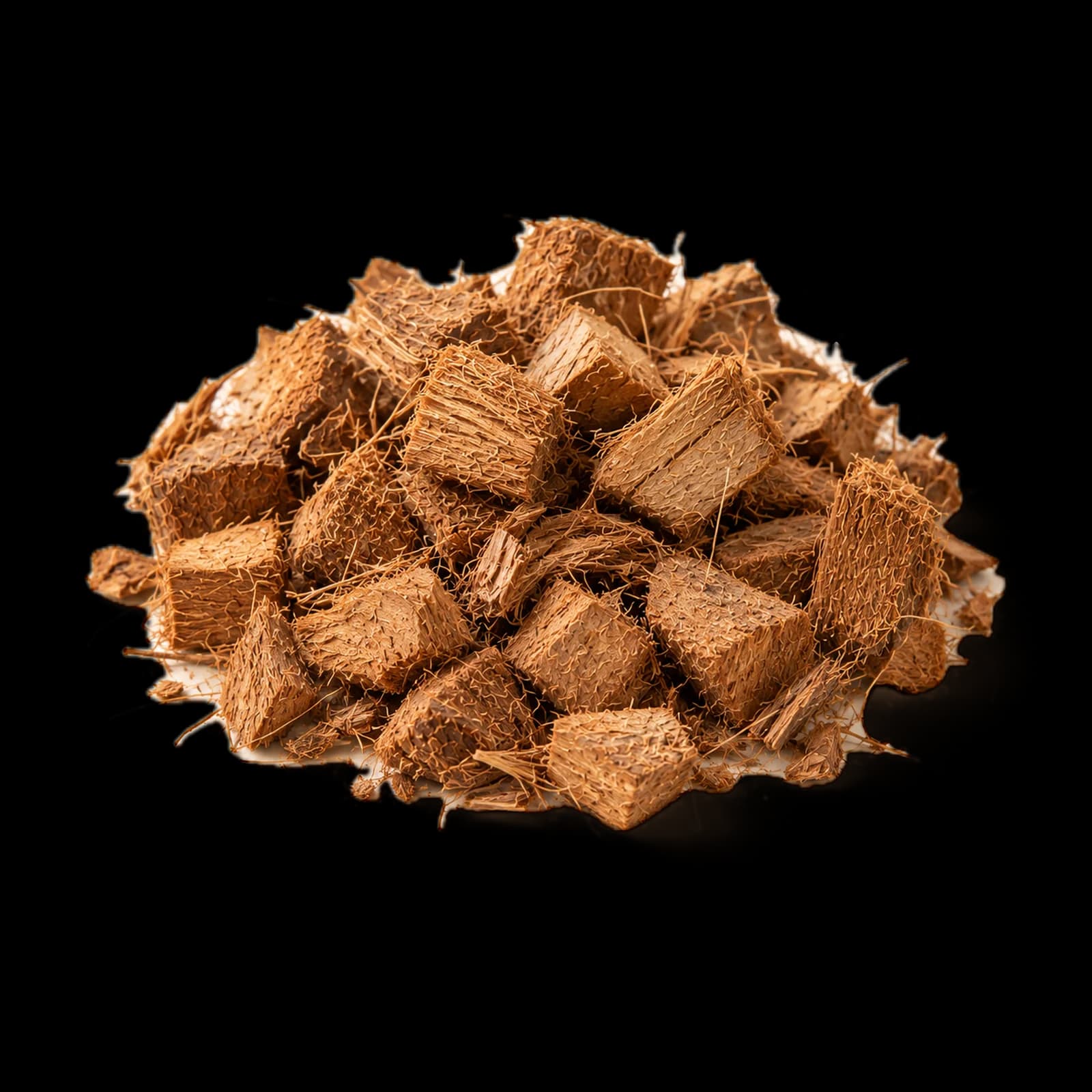 Coconut Husk Chips1 kg ₹149
More from the blog
Sources
- orchids.org (International Orchid Foundation): Ingredients to use when making a potting mix for orchids, Ken Slump (archived copy)
- American Orchid Society: Phalaenopsis culture sheet
- orchids.org, The Orchid Doctor (Bert Hamilton, 1980 and 1988): Coconut husk as potting medium (archived copy)
- RHS: How to grow moth orchids
- Kerala Agricultural University: Package of Practices, ornamental plants (orchids)
- ICAR, Indian Horticulture (2021): A practical guide for successful orchid cultivation
- Acta Horticulturae 878 (ISHS, 2010): Evaluation of growing media components for Phalaenopsis
- Journal of Pharmacognosy and Phytochemistry (2019): Potting media for Dendrobium Sonia 17 at Chintapalli
- Orchid Society Council of Victoria: Coco husk as a potting medium, Brian Milligan
- St. Augustine Orchid Society: Coconut in potting mixes, Courtney Hackney (2003)