Coco peat or soil: which is better for pots?
Coco peat makes a better base for pots than garden soil alone, as long as you feed the plants. Garden soil packs down and drains poorly in a pot, though a share of it mixed in adds weight and trace elements.
On this page
Can I use coco peat instead of soil in pots?
Yes. A coir compost maker quoted by the RHS says coir performs well with most plants. It holds water well and is light and porous, but it is low in nitrogen, so feed plants grown in it. Iowa State University Extension says garden soil compacts in a pot, drains poorly and pulls away from the sides when dry.
A blend makes up for the weak points of each. The Royal Horticultural Society (RHS) says soil-based compost is sometimes added to soil-free mixes. It improves their weight and trace elements, and it steadies swings in water and nutrients. The RHS also warns that fine particles in soil-based compost can block the air spaces roots need.
What is the difference between coco peat and soil?
Coco peat holds plenty of water while still letting air reach the roots. It is much lighter than soil but low in nitrogen. Garden soil alone packs down in a pot and drains poorly. In return, soil brings trace elements and weight, and it evens out swings in moisture.
Water
- Coco peat
- Holds up to 9 or 10 times its own weight in water, by different estimates
- Garden soil
- Packs down and drains poorly, and pulls away from the pot as it dries
Air
- Coco peat
- A light texture lets air into the mix
- Garden soil
- Compaction cuts the air reaching the roots
Nutrients
- Coco peat
- Low in nitrogen: 0.26% in raw coir pith
- Garden soil
- Brings trace elements and steadies nutrient levels
Weight
- Coco peat
- Light and easy to lift
- Garden soil
- Heavy, which helps stop pots tipping over
pH
- Coco peat
- Usually 5.5 to 6.8, so mildly acidic
- Garden soil
- Varies from garden to garden, so test it
Over time
- Coco peat
- High in lignin, so it breaks down slowly
- Garden soil
- Very stable, which suits long-term planting
| What matters | Coco peat | Garden soil |
|---|---|---|
| Water | Holds up to 9 or 10 times its own weight in water, by different estimates | Packs down and drains poorly, and pulls away from the pot as it dries |
| Air | A light texture lets air into the mix | Compaction cuts the air reaching the roots |
| Nutrients | Low in nitrogen: 0.26% in raw coir pith | Brings trace elements and steadies nutrient levels |
| Weight | Light and easy to lift | Heavy, which helps stop pots tipping over |
| pH | Usually 5.5 to 6.8, so mildly acidic | Varies from garden to garden, so test it |
| Over time | High in lignin, so it breaks down slowly | Very stable, which suits long-term planting |
When is soil better than coco peat?
Soil helps most in pots that stay planted for years. The RHS says composts with added soil-based John Innes can work well in containers that will hold plants for more than 2 or 3 years. The soil part stays very stable and evens out swings in water and nutrients, and its weight helps keep tall plants upright.
- Trees, shrubs and fruit trees kept in pots for years: the RHS says John Innes No 3, the richest soil-based mix, suits them.
- Tall or top-heavy plants: nurseries add soil to light mixes for its weight, which reduces tipping over.
Coco peat makes more sense in pots you need to lift and move, since it is light. It also suits seed trays: the RHS says seed compost often contains coir, and that home-made composts can carry fungi that harm seedlings.
How much coco peat should I mix with soil?
The recipes below put coco peat, composted coir pith or the peat they stand in for at 20 to 33% of the mix. The rest is soil, with sand or perlite added for drainage. A widely used recipe is the soil-based John Innes potting mix, developed in the 1930s, which the RHS publishes.
- John Innes potting mix (RHS): 7 parts sterilised loam or garden soil, 3 parts peat substitute and 2 parts coarse sand, by volume. Add fertiliser and a little ground chalk. Most peat substitutes are much less acidic than peat, so it needs less chalk.
- Iowa State University Extension: equal parts garden soil, sphagnum peat moss and perlite. Coco peat can take the place of the peat moss, since the RHS calls coir a common peat substitute.
- Tamil Nadu Agricultural University: 20% composted coir pith mixed into soil and sand, for nursery poly bags and mud pots.
Advice for commercial nurseries differs. The University of Arkansas says soil should be under 10% of a modern container mix, or left out. It names weed seeds and leftover chemicals as the concerns.
Which coco peat is best for pots?
Washed coco peat suits most pots. Coconut husk carries natural salts. A coir compost maker told the RHS that washing at source, with plain water, removes them. Washed coir, he said, is specified below 500 microsiemens (0.5 mS/cm). He added that most plants don't need buffered coir, which is treated with calcium nitrate.
Check that the pack says washed, and look for an EC figure. The University of Arkansas tells growers to check a coir product's salt level, sodium and chloride before switching to it.
Soak it first
Coco peat ships dry and compressed to save weight, so it needs rehydrating. Soak the brick or block in water, then break it up before you mix it into pots.
Questions people ask
Is coco peat good for seedlings?
Yes, coco peat suits seed trays. The RHS says seed compost is kept low in nutrients, since high levels can damage seedlings, and it often contains coir. Keep unsterilised garden soil out of seed trays. The John Innes seed recipe the RHS publishes is 2 parts sterilised loam, 1 part peat substitute and 1 part coarse sand.
Does coco peat need fertiliser?
Yes, plants in pure coco peat need feeding. Tamil Nadu Agricultural University lists raw coir pith at only 0.26% nitrogen, against 1.24% once it is composted. The RHS adds that coir doesn't hold nutrients as well as some other materials. Mix in compost or add fertiliser.
Can you reuse coco peat?
Yes, coco peat lasts well. It is high in lignin, so it resists breakdown and keeps its structure longer than peat. A coir compost maker told the RHS that fruit growers often reuse coir. Blueberries are grown in it for up to 10 years. Add feed or compost when you replant, since it is low in nitrogen.
Is coco peat acidic?
Coco peat is mildly acidic. The University of Arkansas gives a typical pH of 5.5 to 6.8 for coir. A coir compost maker quoted by the RHS puts it at 5.5 to 6.2. He says that can be a bit high for acid-loving plants such as camellias. Blended with lower pH material such as pine bark, it works for them.
Where can I buy coco peat for pots?
Keraline Exports sells coco peat from Kerala as a 650 g brick or a 5 kg block. Either one ships by courier anywhere in India, and you pay only after the team confirms the price on WhatsApp. For larger needs, it supplies washed, buffered or raw coco peat by the truck or the container.
Growing in pots?
Soak a 650 g brick or a 5 kg block of coco peat and mix it into your pots. We send it by courier anywhere in India, and you pay only after we confirm the price on WhatsApp.
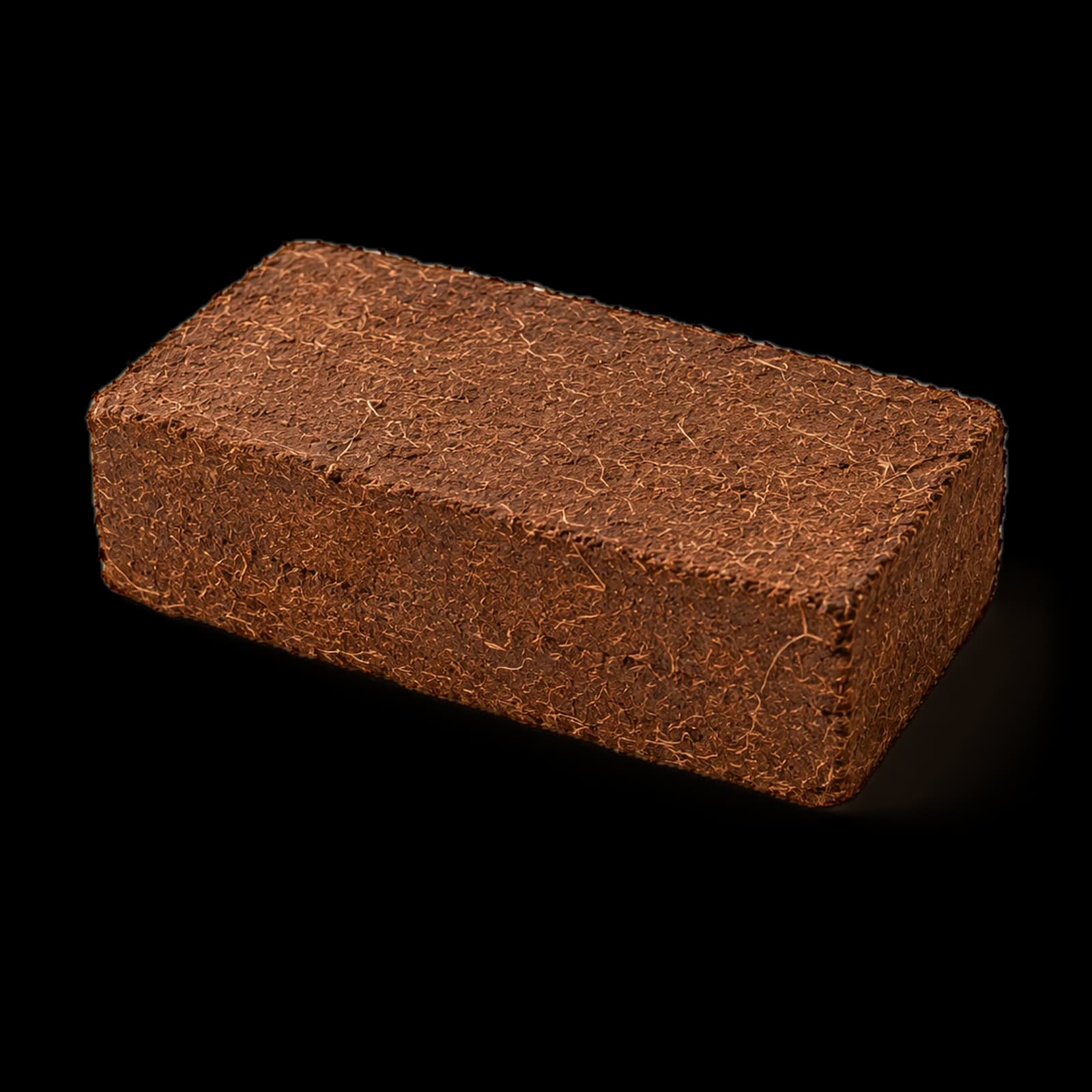 Coco Peat650 g brick ₹139 · 5 kg block ₹299
More from the blog
Sources
- Iowa State University Extension: Can I use garden soil in containers?
- RHS: John Innes potting compost
- RHS: Peat-free compost choices
- RHS: How sustainable is coir? (coir questions answered)
- University of Arkansas Extension: Growing media for container production (FSA6097)
- Tamil Nadu Agricultural University: Coir pith compost