What happens if pooja coconut is spoiled?
We found no temple board or scholarly source that sets one meaning for a spoiled pooja coconut, and popular readings differ, so ask your family priest. The physical causes are plainer: fungal rot, damage, old age or sprouting, and a coconut can rot inside before anything shows on the husk.
On this page
What does it mean if a pooja coconut is spoiled?
We found no single meaning in any source we could check. We looked for a rule from temple boards, priests quoted in the press and scholarly sources, and found none that settles it. Popular readings differ, sometimes within a single article. Ask your family priest or the temple what your own tradition says.
A 2023 article on Boldsky shows how readings split. It says a coconut that opens into 2 rotten halves hints at something auspicious. In the next paragraph, it says a rotten part on the side with the 3 eyes may mean bad news. It also notes that people usually fear a rotten coconut brings bad tidings, and it tells readers to consult an expert.
Why is a pooja coconut rotten inside?
A coconut goes bad inside for plain physical reasons: fungal rot, damage, old age or sprouting. A 2006 study of mite-infested coconuts from 8 southern Kerala districts found that most infected mature nuts showed no mark on the husk, while the rot spread inside. So rot can be hard to spot until you break the nut.
- Fungal rot: in that study, published in the coconut research journal CORD, a fungus kept spreading inside mature nuts during storage. It reached the kernel through the soft eye and made it unfit to eat. A University of Hawaii guide adds that over-mature nuts often grow mould in the rainy season.
- Damage: the same Kerala study found that injuries at harvest let the rot fungus in. The Hawaii guide lists cracked nuts among those sorted out, and says a sudden 8°C change in temperature during storage can crack a mature coconut.
- Old age: the Hawaii guide says a mature coconut in its husk keeps 3 to 5 months at room temperature. By then the water has dried up, the shell has cracked as it dried, or the nut has sprouted.
- Sprouting: a 1990 study in the Japan Agricultural Research Quarterly (JARQ) describes a pear-shaped growth that forms in the hollow centre of a sprouting coconut. As it grows, it digests the kernel around it.
How do you choose a good coconut for pooja?
Shake it, tap it and look it over before you buy. A sloshing sound means there is water inside. India's AGMARK grades for coconuts in shell call for a metallic sound when the shell is struck, with no dull note, and no bad smell. A University of Hawaii guide treats cracks and wet or mouldy eyes as defects.
Shake it
- Good sign
- Water sloshes inside
- Warning sign
- No splashing sound, so the water has dried up
- Who says
- University of Hawaii; Tamil Nadu Agricultural University (TNAU), for seed nuts
Tap the shell
- Good sign
- A metallic sound
- Warning sign
- A dull note
- Who says
- AGMARK
The shell
- Good sign
- No damage, and no blemish from fungus or insects
- Warning sign
- A crack
- Who says
- AGMARK; University of Hawaii
The eyes
- Good sign
- Dry and free of mould
- Warning sign
- Wet or mouldy eyes
- Who says
- University of Hawaii
The top
- Good sign
- No dark brown patch
- Warning sign
- Dark brown colour at the top
- Who says
- AGMARK
Smell
- Good sign
- No bad smell
- Warning sign
- A bad smell
- Who says
- AGMARK
| Check | Good sign | Warning sign | Who says |
|---|---|---|---|
| Shake it | Water sloshes inside | No splashing sound, so the water has dried up | University of Hawaii; Tamil Nadu Agricultural University (TNAU), for seed nuts |
| Tap the shell | A metallic sound | A dull note | AGMARK |
| The shell | No damage, and no blemish from fungus or insects | A crack | AGMARK; University of Hawaii |
| The eyes | Dry and free of mould | Wet or mouldy eyes | University of Hawaii |
| The top | No dark brown patch | Dark brown colour at the top | AGMARK |
| Smell | No bad smell | A bad smell | AGMARK |
No outside check is certain. In the Kerala study of mite-infested nuts, most infected mature nuts showed no mark on the husk. TNAU writes its no-splash test for nuts kept for planting, and AGMARK grades husked coconuts with or without water.
How can you tell if a gola is bad inside?
A gola is a whole ball of dried coconut kernel, so there is no water to shake. Check it when you break it. India's AGMARK grades for edible ball copra call for a reasonably firm, well dried kernel that is pearly white to ash white and sweet, with no rancid taste or bad smell.
Gola, also called ball copra, is made by keeping fully mature coconuts for 10 to 12 months until the kernel comes away from the shell, says TNAU. AGMARK counts a gola as mouldy or black when mould or a dark brown to black colour covers more than 5% of its inner surface.
The World Health Organization (WHO) says mould usually does not grow in properly dried and stored foods. So keep gola dry.
What should you do if the coconut is spoiled during pooja?
Don't eat it. The WHO advises checking nuts, coconut among them, for mould and throwing out any that look mouldy, discoloured or shrivelled. It adds that moulds that make toxins can grow deep into food, not just on the surface. Whether to offer another coconut is a question for your family priest.
For idol immersion, the Central Pollution Control Board's 2020 guidelines say worship materials such as flowers should be removed before immersion and binned at the site, with biodegradable ones composted by the local body.
Questions people ask
Can you eat a coconut that is only a little mouldy?
No. The WHO advises throwing out nuts, coconut among them, that look mouldy, discoloured or shrivelled. It says moulds that make toxins can grow deep into food, not just on the surface. AGMARK's trade grades for coconuts in shell also exclude nuts with a bad smell.
Why is there no water in my coconut?
Coconut water dries up with age. A University of Hawaii guide says the water declines as a coconut matures, and that a mature coconut in its husk keeps 3 to 5 months at room temperature. TNAU, writing about nuts kept for planting, says no splashing sound means the water has dried.
What is the round growth inside my coconut?
It is a sprout. When a coconut germinates, part of the embryo swells into a pear-shaped growth, the haustorium, in the hollow centre. A 1990 JARQ study says it digests the kernel around it and keeps growing until it fills the nut. Whether a sprouted nut suits your puja is a question for your priest.
Can you tell a coconut is bad without breaking it?
Not always. Shaking, tapping and checking the eyes help, but rot can hide. In a 2006 study of mite-infested Kerala coconuts, most infected mature nuts showed no mark on the husk, while the fungus kept spreading inside during storage. So a bad coconut can turn up even after careful checks.
Where can I buy a coconut or gola for puja?
Keraline Exports sells Whole Gola in a pack of 2 for ₹299. It goes by courier anywhere in India, and you pay only after the team confirms the price on WhatsApp. Temples and shops that need gola or coconuts in bulk can ask for a quote on the enquiry page.
Need gola for puja?
Our Whole Gola comes 2 to a pack for ₹299, sent by courier anywhere in India. You pay only after we confirm the price on WhatsApp.
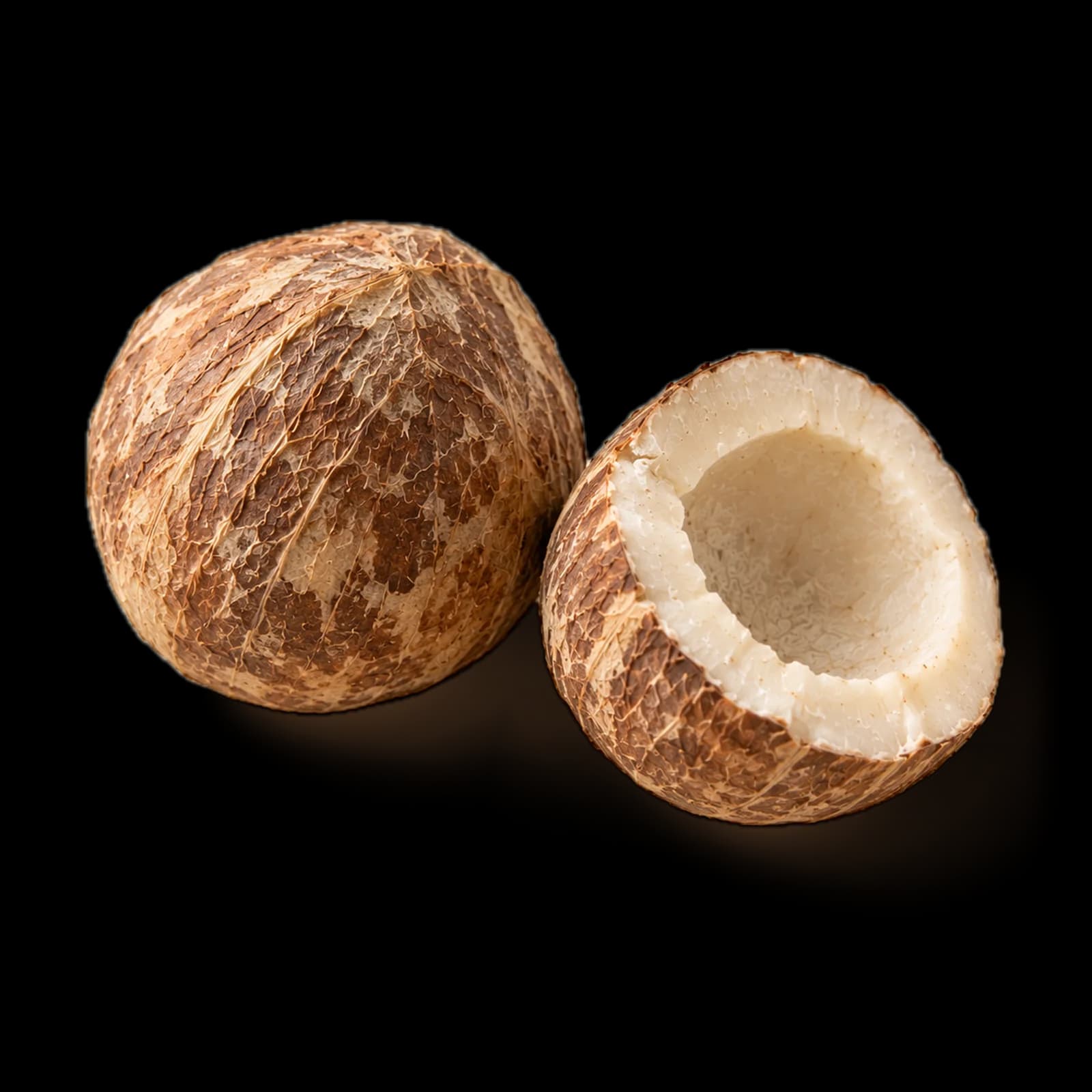 Whole Gola2 pieces ₹299
More from the blog
Sources
- Boldsky: Omens associated with coconut breaking in temples during pujas (2023)
- CORD 22(2), 2006: Role of fungi in fruit rot and immature nut fall of coconut (Venugopal and Chandramohanan)
- University of Hawaii CTAHR: Coconut postharvest quality-maintenance guidelines (F_N-45, 2015)
- JARQ 24(1), 1990: Structure and function of the haustorium in germinating coconut palm seed
- TNAU Agritech: Coconut planting material
- TNAU Agritech: Coconut harvest and post harvest
- AGMARK Coconut Grading and Marking Rules, 1976: coconut in shell (WDRA copy)
- AGMARK grades for ball copra for edible use (WDRA copy)
- WHO: Mycotoxins fact sheet (2 October 2023)
- CPCB: Revised guidelines for idol immersion, 12 May 2020 (copy hosted by the Tamil Nadu Pollution Control Board; the guidelines start on page 22)