Can we eat pooja coconut?
Yes. In Hindu worship, food offered in puja is shared and eaten afterwards as prasad, so a puja coconut can be eaten raw or cooked, though customs differ by family and temple.
On this page
Can we eat coconut offered to God?
Yes. Britannica describes prasada as food and water offered to a deity during puja, which is then shared out and eaten by the worshippers. Coconut is often part of the offering: the Central Pollution Control Board lists it among the natural things generally used in worship. So a coconut from your puja can be eaten, raw or cooked.
At the Vaishno Devi shrine, the offered coconut has been handed back as prasad. Pilgrims leave their coconuts in the main waiting hall and get a token. A 2023 copy of the Shrine Board's site says the priests take care of the rituals, and pilgrims collect the coconuts after darshan at the Coconut Prasad Counter.
Customs differ
Families, regions and temples follow different customs for offered food. Where it matters to you, ask your family priest or the temple before you eat, share or dispose of an offering.
Can we use pooja coconut for cooking?
Yes. Grate it into a chutney, a curry or a sweet, or eat the pieces as they are. A 2007 University of Florida extension fact sheet, since withdrawn, notes that coconut goes into many desserts, fruit salads and main dishes. It also says to rinse the outer shell with cool tap water just before you prepare it.
Use it soon after the puja. The same fact sheet says firm pieces keep up to 10 days in an airtight container in the fridge, and freshly grated coconut 3 to 4 days. The USDA advises against leaving perishable food out of the fridge for more than 2 hours.
Whole, not broken
- Room temperature
- 1 week
- Fridge
- 2 to 3 weeks
- Freezer
- Not recommended
- Source
- USDA FoodKeeper
Broken, firm pieces
- Room temperature
- Not given
- Fridge
- Up to 10 days, in an airtight container
- Freezer
- 8 to 12 months
- Source
- University of Florida
Freshly grated
- Room temperature
- Not given
- Fridge
- 3 to 4 days
- Freezer
- 8 to 12 months, mixed with a little sugar
- Source
- University of Florida
Water of a mature coconut
- Room temperature
- 2 to 6 hours, in an airtight container
- Fridge
- About 2 to 3 days
- Freezer
- Not given
- Source
- Ramadhani 2022, cited by Hasanuddin University, 2024
| Coconut | Room temperature | Fridge | Freezer | Source |
|---|---|---|---|---|
| Whole, not broken | 1 week | 2 to 3 weeks | Not recommended | USDA FoodKeeper |
| Broken, firm pieces | Not given | Up to 10 days, in an airtight container | 8 to 12 months | University of Florida |
| Freshly grated | Not given | 3 to 4 days | 8 to 12 months, mixed with a little sugar | University of Florida |
| Water of a mature coconut | 2 to 6 hours, in an airtight container | About 2 to 3 days | Not given | Ramadhani 2022, cited by Hasanuddin University, 2024 |
A gola is different: it is a ball of dried coconut kernel, so these fresh coconut times do not apply. Keep a gola cool and dry in a closed pouch.
Can you drink pooja coconut water?
If you drink it, drink it soon. A 2024 paper from Hasanuddin University in Indonesia, citing earlier work, says coconut water spoils fast once it leaves the shell. It gives the water of a mature coconut only 2 to 6 hours at room temperature, even in an airtight container. In the fridge, it gives about 2 to 3 days.
Catch the water in a clean bowl as you break the coconut, and strain it through a fine-mesh sieve, as the University of Florida sheet suggests. In the Hasanuddin tests, stored coconut water lost quality faster at room temperature than in the cold. The paper says water turning cloudy can be an early sign of spoilage.
What is a pooja kalash coconut?
It is the coconut set on top of a kalash, a metal pot used in Hindu rites. Wikipedia's entry describes the pot filled with water and crowned with mango leaves and a coconut, an arrangement called the purna kalasha. What happens to it after the rite is a matter of family custom.
If a kalash coconut has sat out for days, look it over before anyone eats it. USDA FoodKeeper gives a whole fresh coconut 1 week at room temperature from the day you buy it. For a coconut bought without its husk, the University of Florida sheet says the shell and its three eyes should be dry, not mouldy or wet.
Check the flesh for mould once you break it. The USDA says a few moulds, in the right conditions, make poisons that can make people sick. It advises against sniffing mouldy food and says to throw away food covered in mould. Its chart does not list coconut, so we would throw away a coconut with any mould on the flesh.
How do you dispose of puja leftovers?
The Central Pollution Control Board's 2020 guidelines for idol immersion ask that flowers, leaves, clothes and decorations be removed before immersion and sorted into colour-coded bins. Biodegradable material can then go for composting and reusable clothes to a local orphanage. As far as possible, only what cannot be recycled, recovered or broken down should go to a sanitary landfill.
The guidelines say littering or burning used flowers, clothes and decorations at immersion sites, or on the banks of a river, lake or pond, should be strictly prohibited. For handing out prasad, they call clean reusable metal, glass or plastic utensils the ideal choice, and allow leaf plates, paper plates and earthen pots in place of single-use plastic and thermocol.
At home, they encourage clay idols and puja materials that break down naturally. Sort the rest of your puja waste the same way: compost what will rot, and keep plastic for the dry waste bin.
Questions people ask
What to do with kalash coconut after pooja?
It depends on your family's custom, so ask your family priest. If your custom is to eat it, rinse the shell, break it and check the flesh for mould, then cook or eat it soon. If not, compost it: the CPCB's immersion guidelines send biodegradable worship material for composting.
What does the coconut on a kalash mean?
Readings differ by tradition. Wikipedia's entry on the kalasha gives one, credited to the writer Devdutt Pattanaik: the pot stands for the earth and the womb, and the mango leaves, linked to Kama, for the pleasure side of fertility. The coconut stands for prosperity and power, and the water for nature's power to give life. Ask your family priest.
Can you freeze pooja coconut?
Yes, once it is broken. The University of Florida sheet says firm coconut meat can be frozen for 8 to 12 months, in sealed moisture-proof packs or glass jars. For grated coconut, it suggests mixing 2 tablespoons of sugar into every 2 cups before freezing. USDA FoodKeeper does not recommend freezing a whole coconut.
Can we share pooja coconut with others?
Yes. Sharing is part of prasad: Britannica describes the offering being shared out and eaten by the worshippers. Hand out the broken pieces the same day, or keep them covered in the fridge until you do. The USDA advises covering cut fruit with plastic wrap, which keeps it moist and away from mould spores in the air.
Where can I buy a gola or coconut for puja?
Keraline Exports sells whole gola in a pack of 2 for ₹299. It goes by courier anywhere in India, and you pay only after the team confirms the price on WhatsApp. Temples, shops and event organisers can order gola and coconuts by the bag or the truck through the enquiry page.
Need a gola for your next puja?
Order a pack of 2 whole gola for ₹299, sent by courier anywhere in India. You pay only after we confirm the price on WhatsApp.
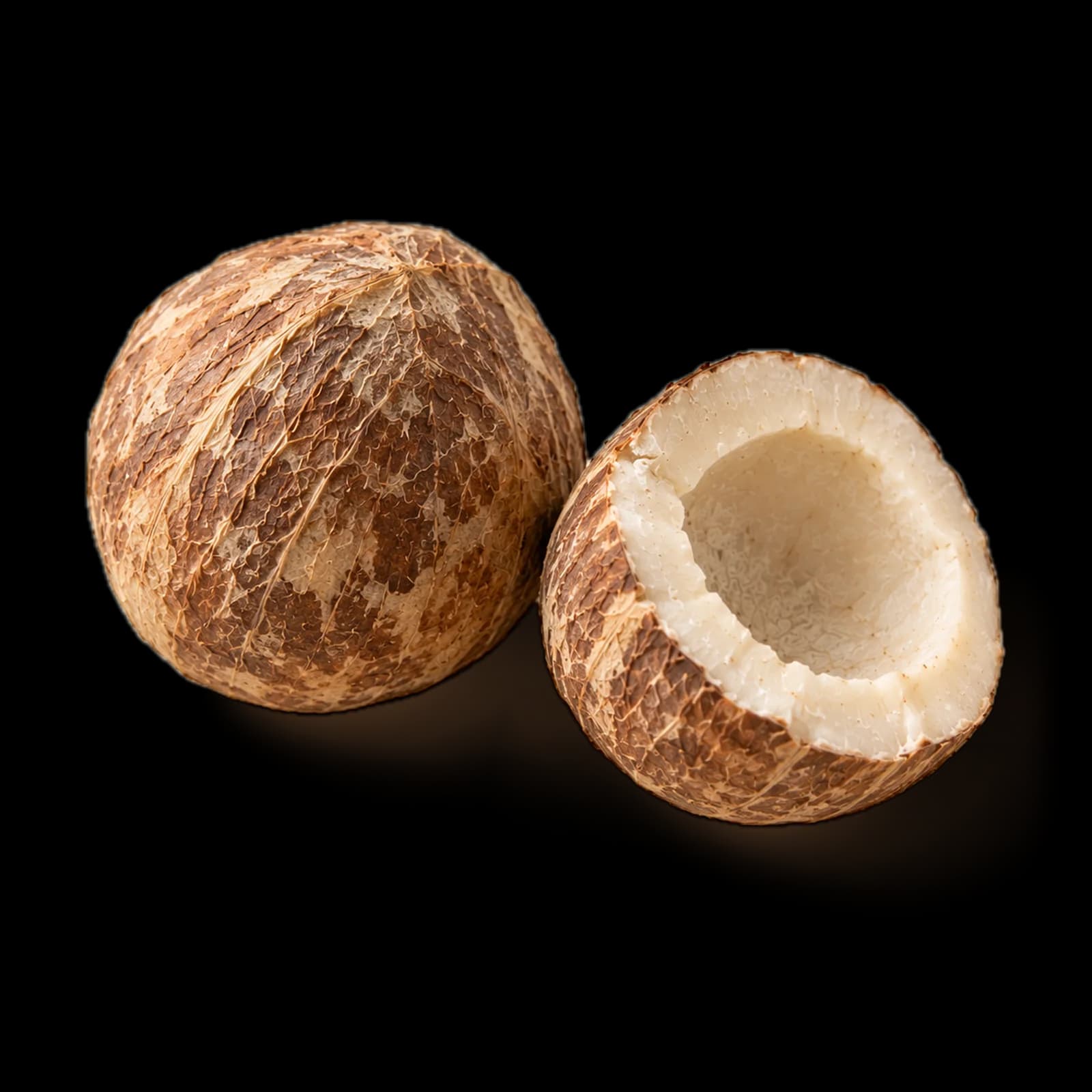 Whole Gola2 pieces ₹299
More from the blog
Sources
- Britannica: prasada (archived copy)
- Shri Mata Vaishno Devi Shrine Board: general information (FAQ)
- Shri Mata Vaishno Devi Shrine Board: Coconut Prasad Counter, 2023 (archived copy)
- Central Pollution Control Board: Revised guidelines for idol immersion, 12 May 2020 (hosted by TNPCB; the guidelines start on page 22)
- USDA FoodKeeper data (archived copy)
- USDA FSIS: Molds on food: are they dangerous? (archived copy)
- UF/IFAS Extension: Coconut fact sheet, revised 2007, since withdrawn (archived copy)
- Hasanuddin University, SALAGA Journal: Changes in coconut water quality during storage, December 2024
- Wikipedia: Kalasha