How to store dry coconut
Keep dry coconut sealed in an airtight container in a cool, dry, dark place, and move grated coconut to the fridge or freezer once its pack is opened. Throw away any piece that shows mould, inside or out.
On this page
How long does dry coconut last?
It depends on the form and how you keep it. India's warehousing regulator, WDRA, lists a total shelf life of 12 months for ball copra kept in warehouses. The USDA's FoodKeeper says shredded coconut keeps 1 year unopened in the pantry, and 8 months in the fridge once opened.
Ball copra (whole kernel) in a warehouse
- How long
- 12 months in total
- Source
- WDRA, India's warehousing regulator
Copra in polythene tar-coated gunny bags
- How long
- Up to 6 months
- Source
- Tamil Nadu Agricultural University
Shredded coconut, unopened, in the pantry
- How long
- 1 year from purchase
- Source
- USDA FoodKeeper
Shredded coconut, opened, in the fridge
- How long
- 8 months
- Source
- USDA FoodKeeper
Shredded coconut in the freezer
- How long
- 1 year from purchase
- Source
- USDA FoodKeeper
| Form and storage | How long | Source |
|---|---|---|
| Ball copra (whole kernel) in a warehouse | 12 months in total | WDRA, India's warehousing regulator |
| Copra in polythene tar-coated gunny bags | Up to 6 months | Tamil Nadu Agricultural University |
| Shredded coconut, unopened, in the pantry | 1 year from purchase | USDA FoodKeeper |
| Shredded coconut, opened, in the fridge | 8 months | USDA FoodKeeper |
| Shredded coconut in the freezer | 1 year from purchase | USDA FoodKeeper |
The FoodKeeper gives its times for freshness and quality, and it lists shredded coconut, not copra halves. None of these sources gives a time for halves kept in a home kitchen. Check each piece before you use it.
What is the best way to store dry coconut?
Keep it dry, cool, dark and sealed. A German cargo insurers' guide to copra says that more than 6% water, with very humid air, causes mould. The same guide says to keep copra in the dark and away from air and metal, or it turns brown and rancid.
- Dry: the cargo guide says extra water wakes the enzymes that split copra's fat, which can make it rancid.
- Cool: in a 1995 study of copra at 22 to 38°C, the warmer the copra, the lower the moisture level at which mould could grow.
- Dark and airtight: the cargo guide says light and heat can speed up the fat breaking down, and oxygen in the air can turn copra rancid.
- Away from pests: Tamil Nadu Agricultural University (TNAU) lists the rice moth and the red flour beetle among pests of stored copra.
Should you keep dry coconut in the fridge?
Yes, for grated coconut once its pack is opened. The USDA's FoodKeeper gives opened shredded coconut 8 months in the fridge, and 1 year in the freezer from the date of purchase. The cargo guide says low temperatures can limit the enzymes that turn copra rancid. Keep it sealed, though: the USDA says mould can grow in a fridge too.
The FoodKeeper has no fridge time for whole copra halves. If you chill them, use a sealed box or bag, as you would in the cupboard.
Why does dry coconut turn black inside?
Black inside can mean mould or rot. The German cargo guide says copra with more than 6% water, kept in very humid air, grows mould and later rots, turning black and musty. India's AGMARK grades for edible ball copra count black kernels together with mouldy ones.
AGMARK counts a ball of copra among its mouldy and black kernels when more than 5% of its inner surface has mould or is dark brown to black. The cargo guide also names black, fire or kiln dried copra as a lower value kind of copra.
Why does dry coconut smell rancid?
A rancid smell means the coconut's fat has started to break down. The German cargo guide says extra water wakes enzymes that split the fat into free fatty acids, which can smell and taste unpleasant. Light and heat can speed this up. Oxygen in the air can also react with the fat and turn copra rancid.
The guide adds that old copra may already be rancid, because it is so rich in oil. AGMARK's grades say edible ball copra must be sweet and free from rancid taste and objectionable odour, so a rancid piece does not meet them, even with no mould on it.
When should you throw dry coconut away?
Throw it away if you see mould on it or inside it. The USDA's food safety service puts nuts on its list of mouldy foods to discard. It warns that mould roots can run deep into food, and that toxins may spread through it. The list does not name coconut.
Some moulds on copra make aflatoxin. A 2025 study of stored copra from traders in East Godavari, Andhra Pradesh, found Aspergillus flavus was the most common mould. The Philippines' Bureau of Agriculture and Fisheries Standards (BAFS) says aflatoxins come from yellow-green moulds, Aspergillus flavus and A. parasiticus. FSSAI, India's food regulator, names copra among foods commonly affected by aflatoxin in a training manual, and the USDA calls aflatoxin a cancer-causing poison.
Don't cut off the mould and keep the rest. The USDA allows that only for a few firm foods, such as hard cheese and carrots. When you find mould, the USDA says to do this:
- Don't sniff it, since that can cause breathing trouble.
- Wrap it or bag it, and put it in a covered bin that children and animals can't reach.
- Clean the cupboard or fridge spot where it was stored.
- Check other food it may have touched.
Questions people ask
What colour should dry coconut be inside?
It should be white. India's AGMARK grades for edible ball copra say the meat should be pearly white to ash white, and sweet in taste. The outer skin, or testa, may be whitish to dark brown. If more than 5% of the inner surface is dark brown to black, AGMARK counts it among its mouldy and black kernels.
Can you roast mouldy coconut and still use it?
No, throw it away. The Philippines' Bureau of Agriculture and Fisheries Standards says aflatoxins resist high temperatures and can survive food processing. The USDA adds that you see only part of a mould on the surface of food. If someone feels ill after eating mouldy food, see a doctor.
Can you freeze grated dry coconut?
Yes. For freshness and quality, the USDA's FoodKeeper says to use frozen shredded coconut within 1 year of buying it. Pack it airtight, since the German cargo guide says both moisture and air spoil copra. The FoodKeeper gives no freezer time for whole copra halves.
What are the small insects in stored dry coconut?
Tamil Nadu Agricultural University lists several insects that attack stored copra. They include the copra beetle, the saw-toothed grain beetle, the red flour beetle and the rice moth. TNAU says the saw-toothed grain beetle breeds all year round in the mould and cracks of spoiled copra.
Where can I buy dry coconut?
Keraline Exports sells Dry Coconut Halves (khopra) from Malappuram, at ₹299 for 500 g or ₹549 for 1 kg. They go by courier anywhere in India, and you pay only after the team confirms the price on WhatsApp. For larger orders, it supplies dry coconut and copra by the bag or the truck.
Buying dry coconut?
Order Dry Coconut Halves in a 500 g or 1 kg pack, sent by courier anywhere in India. You pay only after we confirm the price on WhatsApp.
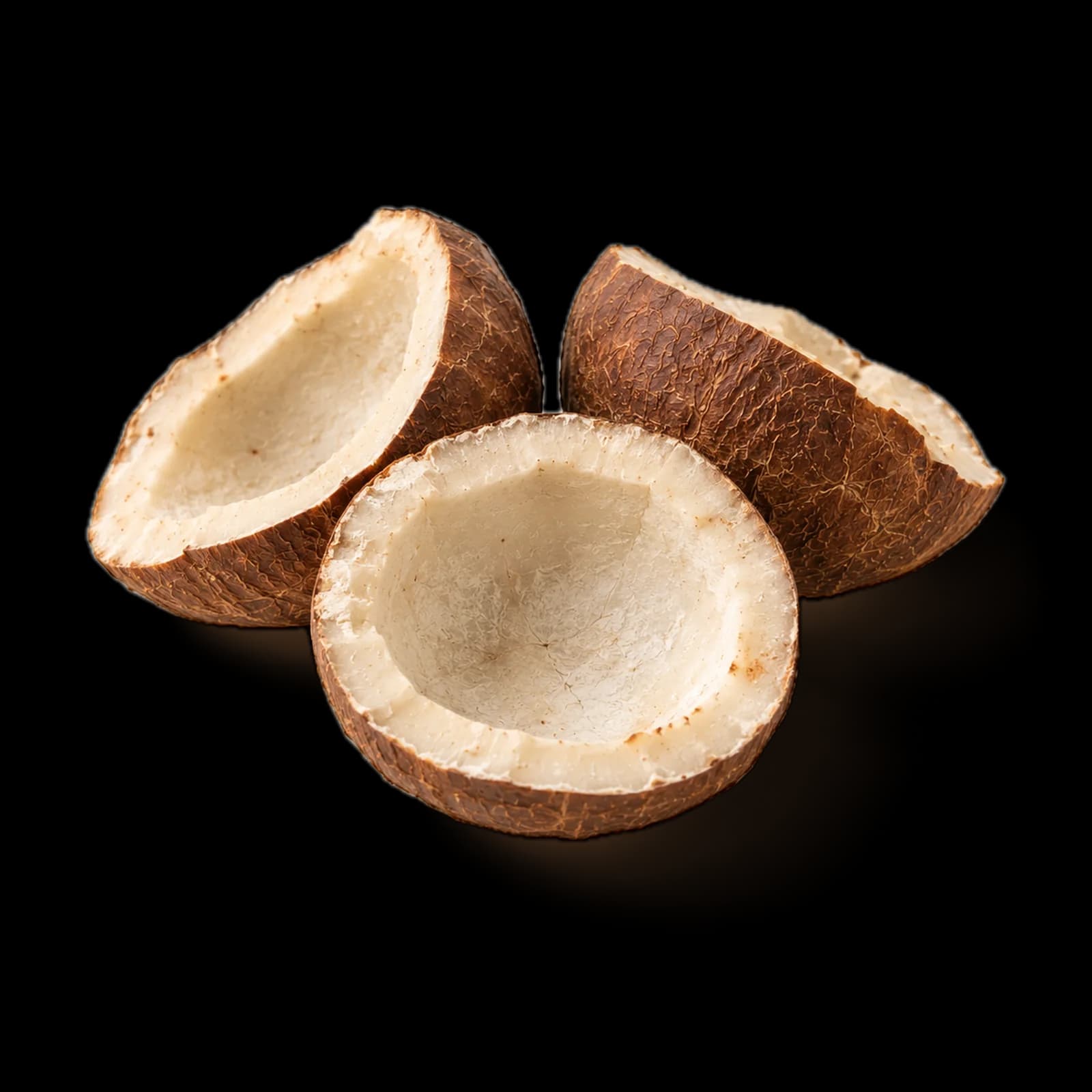 Dry Coconut Halves500 g ₹299 · 1 kg ₹549
More from the blog
Sources
- USDA FSIS: Molds on food: are they dangerous?
- USDA FoodKeeper: Coconut, shredded
- Tamil Nadu Agricultural University: Coconut harvest and post harvest
- AGMARK grades for edible ball copra (WDRA copy)
- WDRA: Ball copra shelf life
- FSSAI: Training manual on the analysis of mycotoxins
- Aruna, Suresh and Srinivasulu (2025), Agricultural Science Digest: In-vitro studies on aflatoxin contamination and management of copra quality
- Diamante (1995), Annals of Tropical Research: Moisture adsorption isotherms of copra
- Transport Information Service, German Insurance Association (GDV): Copra
- Bureau of Agriculture and Fisheries Standards, Philippines: Ensuring the safety and quality of copra (2021)