Desiccated coconut vs dry coconut
Desiccated coconut is fresh coconut kernel with its brown skin pared off, then grated or shredded and dried to 3% moisture or less under FSSAI's standard. Dry coconut, sold for eating as edible copra, is the whole kernel dried inside the shell or cut in halves, with the brown skin left on.
On this page
What is the difference between desiccated coconut and dry coconut?
Desiccated coconut is a processed ingredient: white kernel only, grated or shredded, then dried in hours. Dry coconut is the kernel itself, dried whole as a ball or as cup-shaped halves, with its brown skin on. Both end up low in moisture and high in fat, but different standards cover them.
Made from
- Desiccated coconut
- Fresh, fully mature kernel, pared, then grated or shredded and dried (FSSAI, BIS)
- Dry coconut (edible copra)
- Whole kernels from fully mature nuts for ball copra (TNAU); kernels cut in halves for cup copra (AGMARK)
Brown skin (testa)
- Desiccated coconut
- Removed: the 1999 edition of BIS IS 966 allows none
- Dry coconut (edible copra)
- Left on: AGMARK describes it as whitish to dark brown
Form
- Desiccated coconut
- Powder, flakes, chips or shreds (FSSAI)
- Dry coconut (edible copra)
- Whole balls or cup-shaped halves (AGMARK)
Drying
- Desiccated coconut
- About 10 hours in hot air at 80 to 90°C (ICC)
- Dry coconut (edible copra)
- Ball copra: whole nuts stored 10 to 12 months (TNAU)
Moisture limit
- Desiccated coconut
- 3% (FSSAI), 4% (Codex), 2.5% (BIS IS 966:1999, since replaced by IS 966:2023)
- Dry coconut (edible copra)
- 7% for ball copra, 6% for cup copra (AGMARK)
Moisture measured
- Desiccated coconut
- 3.0 g, unsweetened (USDA)
- Dry coconut (edible copra)
- 3.97 g, dry kernel (IFCT 2017)
Fat
- Desiccated coconut
- At least 60%, or 35 to 60% if partly defatted (FSSAI); 64.5 g measured (USDA, 1984)
- Dry coconut (edible copra)
- 63.26 g, dry kernel (IFCT 2017)
Main use
- Desiccated coconut
- Confectionery and other food industries (Coconut Development Board)
- Dry coconut (edible copra)
- Eaten as a dry fruit (Coconut Development Board)
| What differs | Desiccated coconut | Dry coconut (edible copra) |
|---|---|---|
| Made from | Fresh, fully mature kernel, pared, then grated or shredded and dried (FSSAI, BIS) | Whole kernels from fully mature nuts for ball copra (TNAU); kernels cut in halves for cup copra (AGMARK) |
| Brown skin (testa) | Removed: the 1999 edition of BIS IS 966 allows none | Left on: AGMARK describes it as whitish to dark brown |
| Form | Powder, flakes, chips or shreds (FSSAI) | Whole balls or cup-shaped halves (AGMARK) |
| Drying | About 10 hours in hot air at 80 to 90°C (ICC) | Ball copra: whole nuts stored 10 to 12 months (TNAU) |
| Moisture limit | 3% (FSSAI), 4% (Codex), 2.5% (BIS IS 966:1999, since replaced by IS 966:2023) | 7% for ball copra, 6% for cup copra (AGMARK) |
| Moisture measured | 3.0 g, unsweetened (USDA) | 3.97 g, dry kernel (IFCT 2017) |
| Fat | At least 60%, or 35 to 60% if partly defatted (FSSAI); 64.5 g measured (USDA, 1984) | 63.26 g, dry kernel (IFCT 2017) |
| Main use | Confectionery and other food industries (Coconut Development Board) | Eaten as a dry fruit (Coconut Development Board) |
How is desiccated coconut made?
FSSAI defines desiccated coconut as the sound white kernel of the coconut, peeled, milled, grated and dried. The steps can include de-husking, paring, washing, breaking up the kernel, drying and sifting. It must be white to light creamy white, with no more than 3% moisture. Unless some oil was taken out, it must hold at least 60% oil.
The International Coconut Community (ICC) describes a typical line. The kernel is taken out of the shell and broken up in a hammer or pin mill. It is steam blanched for about 20 minutes to cut down microbes. Then it dries in hot air for about 10 hours at 80 to 90°C, down to 3% moisture.
Tamil Nadu Agricultural University (TNAU) says the brown rind must be pared off thoroughly, or the finished coconut shows brown flecks. The 1999 edition of the Indian Standard, BIS IS 966, allows no shell, testa, added sugar or added starch.
Is dry coconut the same as copra?
Yes. Dry coconut sold for eating is edible copra. FSSAI's food categories list copra as dried coconut, whole or cut. The Coconut Development Board says India makes 2 kinds: milling copra, used to extract oil, and edible copra, eaten as a dry fruit and made as balls and cups.
Ball copra is the whole kernel in one round piece. TNAU says it is made by storing fully mature nuts for 10 to 12 months, until the kernel comes loose from the shell. Cup copra is a kernel cut into 2 roughly equal halves. AGMARK's edible grades call for both to be well dried, with pearly white to ash white meat that tastes sweet.
Is desiccated coconut drier than dry coconut?
It depends whose figures you use. USDA FoodData Central lists unsweetened desiccated coconut at 3 g of water per 100 g, and India's food composition tables (IFCT 2017) list dry coconut kernel at 3.97 g. TNAU gives copra 6 to 7% moisture, and the Coconut Development Board gives desiccated coconut 1.3 to 2.5%.
The standards leave a wider gap. FSSAI caps desiccated coconut at 3% moisture, and the Codex Alimentarius standard at 4%. AGMARK allows up to 7% in ball copra and 6% in cup copra.
Fat can vary too. FSSAI allows desiccated coconut with some oil taken out, at 35 to 60% oil. The ICC lists high fat desiccated coconut at 60 to 65% fat and low fat at 40 to 50%. Check the pack if fat matters to you.
Can I use desiccated coconut instead of dry coconut?
No source we read tests that swap directly. USDA and IFCT 2017 put both at about 3 to 4 g of water and 63 to 65 g of fat per 100 g, though TNAU's copra figure is wetter. The Coconut Development Board says desiccated coconut is used in place of grated coconut in various household preparations.
The ICC also calls it an alternative to raw grated coconut. For a paste, Kerafed, a Kerala federation that makes Kera desiccated coconut, says to mix it with warm water equal to one third of its quantity. Going the other way, grate dry coconut first. TNAU notes that unpared kernel leaves brown flecks in desiccated coconut, so pare dry coconut if you want it white.
The Coconut Development Board says most desiccated coconut made in India goes to confectionery and other food industries. The ICC lists sweets, baking, puddings and ice cream, plus use as a garnish in savoury dishes. Kerafed says its low fat powder suits coconut chutney, sweets and barfi, and calls desiccated coconut an ingredient for curries and snacks.
Questions people ask
Is desiccated coconut dry or wet?
Dry. FSSAI's standard allows it no more than 3% moisture, and USDA FoodData Central lists 3.0 g of water per 100 g of unsweetened desiccated coconut. Fresh coconut is far wetter. USDA lists raw coconut meat at 47 g of water per 100 g, in figures from 1984, and IFCT 2017 lists fresh kernel at 36.14 g.
What is the difference between desiccated and shredded coconut?
Shreds are one cut of desiccated coconut. The Codex Alimentarius standard lets it be sized by sieve as extra fine, fine or medium, and groups flakes, chips and shreds as special cuts. Sweetened shredded coconut falls outside that standard. TNAU names 4 main grades: extra fine, macaroon (fine), medium and coarse.
Is desiccated coconut the same as coconut powder?
It can be. FSSAI lets desiccated coconut be sold as powder, flakes, chips or shreds, and the ICC calls the powder desiccated coconut powder. Coconut milk powder is a different product. FSSAI defines it as dried coconut milk, which may contain maltodextrin and sodium caseinate, and the Coconut Development Board says it is mixed with water to make coconut milk.
Is desiccated coconut sweetened?
Not as the standards define it. The 1999 edition of BIS IS 966, since replaced in 2023, allows no added sugar, and the Codex standard does not cover sugared, salted, flavoured or roasted coconut. Sweetened kinds are sold, though: USDA FoodData Central lists sweetened shredded and flaked coconut as separate foods. Read the ingredients list if you need it unsweetened.
Where can I buy dry coconut?
Keraline Exports sells dry coconut halves (khopra) from Malappuram, Kerala, at ₹299 for 500 g or ₹549 for 1 kg. They go by courier anywhere in India, and you pay only after the team confirms the price on WhatsApp. Traders can buy dry coconut or copra by the truck or the container through the bulk enquiry page.
Cooking with dry coconut?
Our dry coconut halves come in 500 g and 1 kg packs, ready to grate at home. We send them by courier anywhere in India, and you pay only after we confirm the price on WhatsApp.
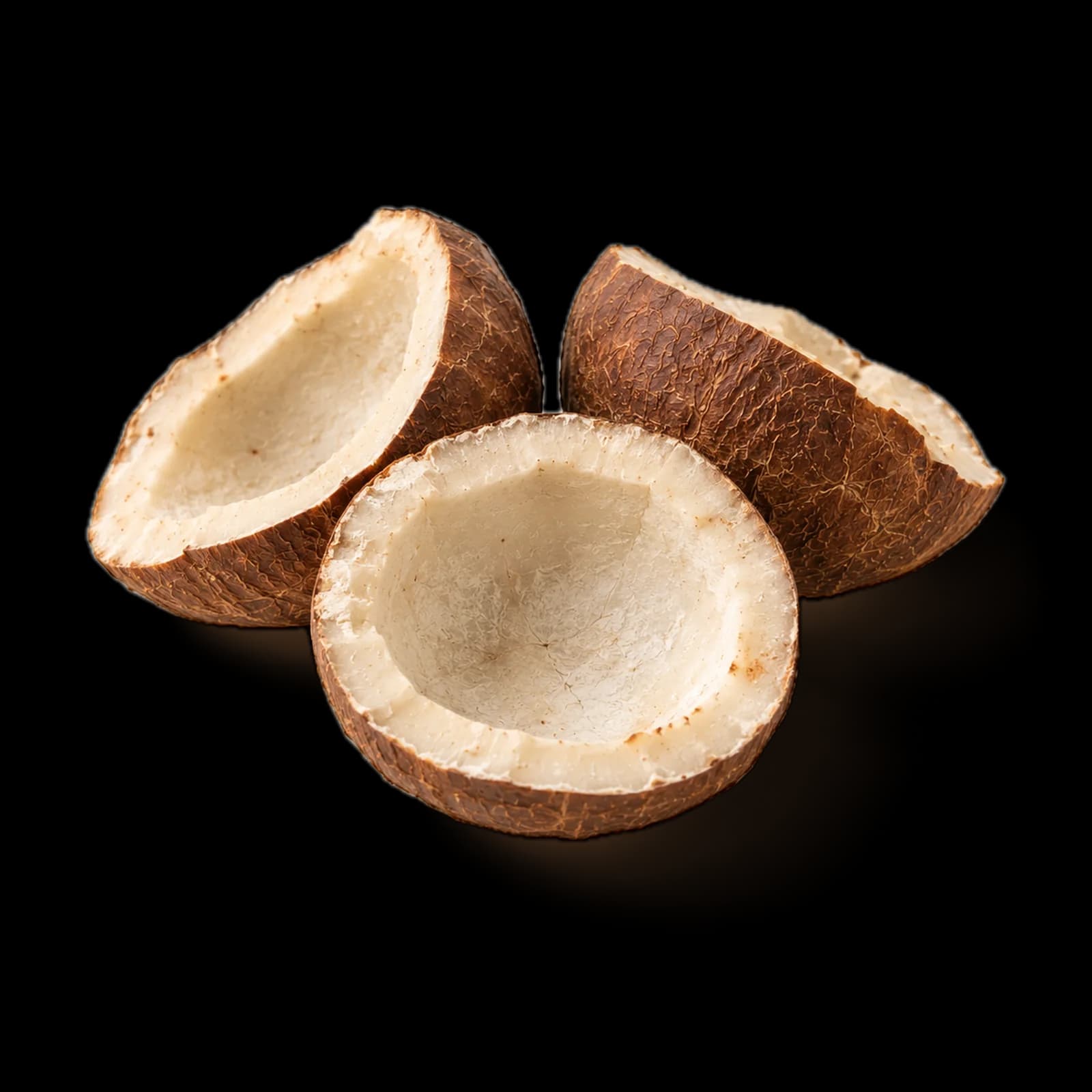 Dry Coconut Halves500 g ₹299 · 1 kg ₹549
More from the blog
Sources
- FSSAI: Food Products Standards and Food Additives Regulations, compendium of 20 December 2022 (2.3.45 desiccated coconut, 2.3.63 coconut milk powder)
- Codex Alimentarius: Standard for desiccated coconut, CXS 177-1991, revised 2011 (copy hosted by TNAU)
- BIS: IS 966 (1999), Desiccated coconut, specification (Public.Resource.Org copy)
- AGMARK: grade designation and definitions of quality of ball copra for edible use (WDRA copy)
- AGMARK: grade designation and definitions of quality of cup copra for edible use (WDRA copy)
- International Coconut Community: desiccated coconut
- Coconut Development Board: coconut products
- Tamil Nadu Agricultural University: post harvest technology of coconut
- Tamil Nadu Agricultural University: coconut harvest and post harvest, ball copra
- USDA FoodData Central: coconut meat, dried (desiccated), not sweetened (FDC 170170)
- USDA FoodData Central: coconut meat, raw (FDC 170169)
- National Institute of Nutrition: Indian Food Composition Tables 2017 (IFCT 2017), Table 1
- Kerafed: Kera desiccated coconut