Coconut & Coir Catalogue
Coconut Shell
Cleaned, de-fibred coconut shells for carbon and craft use
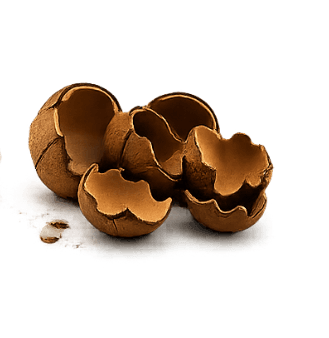
Coconut shell is the hard endocarp left after de-husking, cleaned and de-fibred for onward processing. It is the feedstock for shell charcoal and activated carbon, and is also bought for shell powder, handicraft and industrial fuel use.
- Order size
- Bags to full containers
- Dispatch
- Cochin port · road across India
- Lead time
- 7 – 25 days
- HS code
- 1404.90
Typical specification
- Moisture
- ≤ 10 – 12%
- Foreign matter
- < 1%
- Fibre residue
- Removed — de-fibred shells
- Form
- Half cups or broken pieces, as specified
- Size (broken)
- 25 – 75 mm, gradeable on request
Typical trade values. The exact specification is agreed and confirmed against your order before dispatch.
Grades we supply
Half cup shells
Cleaned half shells for handicraft, bowls and decorative use.
Broken / graded pieces
Sized pieces for charcoal and activated carbon feedstock.
Shell powder feedstock
Shells selected for milling into shell powder.
Packing & container loading
- PP woven bags
- 25 – 50 kg
- Jumbo / bulk bags
- 500 – 1,000 kg
- 20ft container
- ≈ 8 – 10 MT (volume-limited)
- 40ft high cube
- ≈ 16 – 18 MT
Container figures are shown for reference — there is no minimum order. Smaller lots, part loads and domestic road dispatch are quoted just as readily. Loading quantities vary with grade, bale or block density and the destination's weight limits.
Applications
- Activated carbon feedstock
- Coconut shell charcoal production
- Shell powder for resin and abrasives
- Handicraft, bowls and buttons
- Industrial and domestic fuel
Coconut Shell — buyer questions
Are the shells de-fibred before shipping?
Yes. Shells are cleaned and de-fibred, with foreign matter kept under 1% and moisture at 10–12% so they arrive dry and ready for carbonisation or milling.
Why does a container of shells hold less tonnage than charcoal?
Coconut shell is bulky relative to its weight, so containers fill by volume before they reach a weight limit — about 8–10 MT in a 20ft. Quoting on a per-container basis rather than per MT usually works out clearer for both sides.
What quantity of coconut shell can I order?
Whatever suits you — there is no fixed minimum. We supply single bags and part loads to buyers within India, part-container (LCL) consignments, and full 20ft and 40ft containers for export. Tell us the quantity you need and we will quote it.
Do you supply within India as well as export?
Yes. Domestic orders are dispatched by road from Malappuram, Kerala, on a GST invoice, and export consignments load at Cochin port. The same grades are available either way.
Do you send samples before an order?
Yes. Samples are couriered on request, with courier freight at the buyer's account. Sample specifications are matched to the grade quoted so what you test is what you receive.
What are your payment terms?
Within India, bank transfer or UPI against a proforma invoice. For export, 30% advance by TT with the balance against a copy of the bill of lading, or an irrevocable LC at sight on larger consignments. Terms are agreed per order.
How is it dispatched and how long does it take?
Domestic loads go by road from our Malappuram base; export consignments load at Cochin (Kochi), with Tuticorin available on request. Typical lead time runs from about a week for a small domestic load to 15–25 days for a full export container, depending on grade and packing.
What documents do you provide?
Domestic orders ship with a GST invoice and e-way bill. Export consignments carry the commercial invoice, packing list, bill of lading and certificate of origin as standard, with phytosanitary certificate, fumigation certificate and third-party inspection arranged where the destination or the buyer requires them.